What Counts as a Recreational Fire?
Three feet across, two feet high, and not in a manufactured fireplace. Every permit question in this category hinges on that sentence, so here it is in full.
DisclosureWe earn a commission when you buy through the links on this page, at no extra cost to you. Prices come from Amazon and change without notice. How this site is funded.
A recreational fire is an outdoor fire with a total fuel area of 3 feet or less in diameter and 2 feet or less in height, burning something other than rubbish, and NOT contained in an incinerator, outdoor fireplace, portable outdoor fireplace, barbeque grill or barbeque pit. Cross either dimension and it is open burning instead.
The definition, in full
Four things are doing work in that sentence, and it is worth taking them one at a time, because the whole of the rest of this hub follows from them.
1. 'Materials other than rubbish'
Burning household waste is a different activity with different and much stricter rules, and in many jurisdictions it is simply prohibited. If you are burning rubbish, none of the recreational-fire provisions apply to you. This also excludes construction offcuts, treated lumber and yard-waste disposal, which are frequently what people are actually doing when they get into trouble. What is genuinely unsafe to burn.
2. 'Not contained in ... a portable outdoor fireplace'
This is the exclusion that most content on the subject misses entirely. A fire inside a manufactured pit with walls is explicitly not a recreational fire. It is a portable outdoor fireplace, which the code defines separately as 'a portable, outdoor, solid-fuel-burning fireplace that may be constructed of steel, concrete, clay or other noncombustible material', and which has its own section and its own clearance requirement.
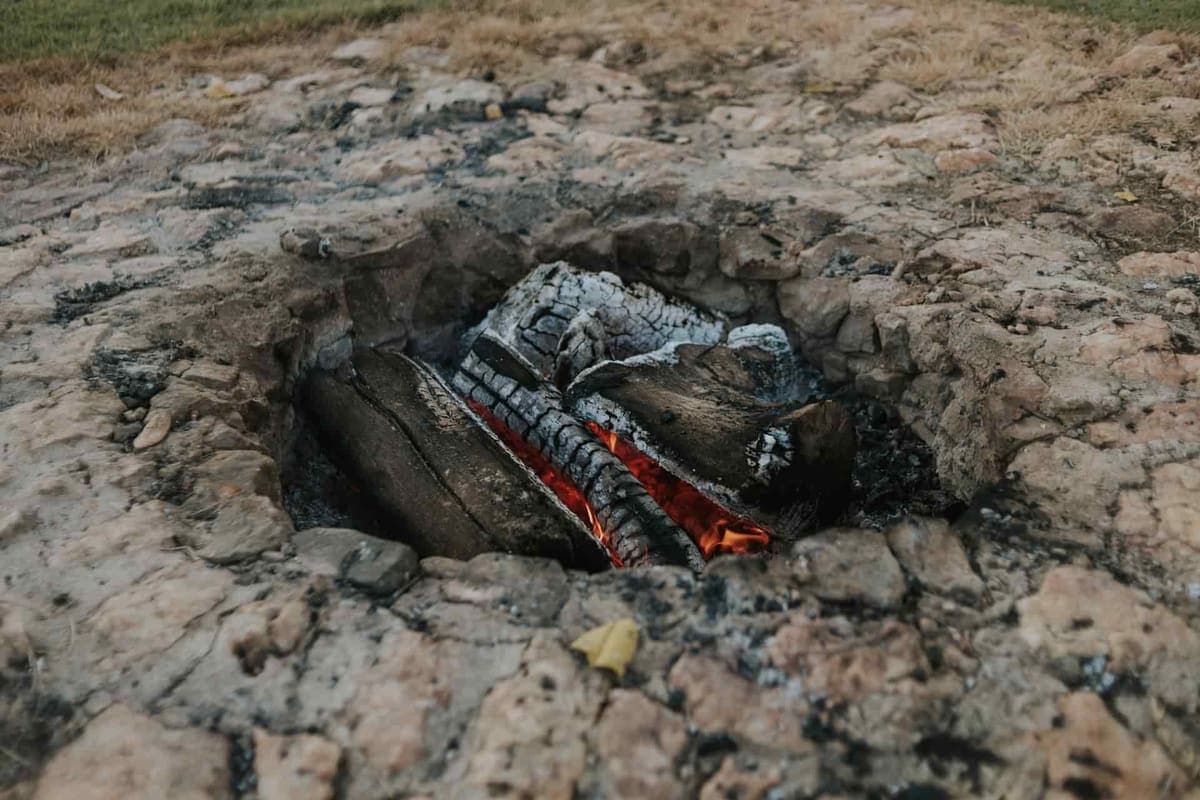
So a Solo Stove, a Breeo, a steel bowl and a chiminea are all portable outdoor fireplaces. A fire in a ring set into the ground, or on bare ground, is a recreational fire. Same wood, same size, different regulatory category — and different distances.
3. '3 feet or less in diameter'
This is the fuel area, not the pit. A 42 inch fire ring has a 36 inch interior, which is exactly 3 feet — right at the limit. A 36 inch ring has a 30 inch interior and sits comfortably inside it. The measurement that matters is where the fuel actually is, so a large pit loaded conservatively can stay inside the definition and a small pit heaped high may not.
4. '2 feet or less in height'
Height of the fuel, again — not the flame. This one is easy to exceed accidentally by stacking wood high in a deep pit, and it is the dimension nobody thinks about.
Why the category decides everything else
| Recreational fire | Portable outdoor fireplace | |
|---|---|---|
| Code section | IFC 307.4.2 | IFC 307.4.3 |
| Typical example | Fire ring, fire on the ground | Manufactured pit, chiminea, steel bowl |
| Clearance from a structure | 25 ft | 15 ft |
| Residential exception | None | Yes — 1- and 2-family dwellings |
| Size limit in the definition | 3 ft x 2 ft fuel area | None stated |
| Above the limit | Becomes open burning — usually a permit | Not applicable |
Both sections quoted and linked in the sources below. The full clearance table by obstruction.
Read that table and the practical significance is clear. A manufactured pit is in the more permissive category, and at a single-family home the 15 ft clearance requirement is excepted entirely. That is a materially better legal position than an open fire in a ring, and almost nobody buying a fire pit knows it.
What happens above the threshold
Cross 3 feet of fuel area or 2 feet of height in an uncontained fire and you are no longer having a recreational fire — you are conducting open burning, which IFC 307 governs separately and which typically requires a permit from the fire code official. In many jurisdictions those permits exist for agricultural and land-clearing purposes and are not issued for a backyard bonfire.
That is why the size of a fire ring is a legal question before it is a taste question, and why we flag the 42 inch ring as sitting exactly at the line. Fire pit rings, sized against the threshold.
The caveat that applies to all of this
One of each category
| # | Product | Best for | Key spec | Price |
|---|---|---|---|---|
| 1 |  Sunnydaze Fire Pit Ring Insert, 36 inA 2 mm steel liner for a hole in the ground. The cheapest real fire pit there is, and the shape the recreational-fire definition was written around. | An in-ground fire pit | 30 in | $179.00 · View on Amazon |
| 2 |  Solo Stove Bonfire 2.0The default smokeless pit: 19.5 in of 304 stainless, light enough for one person to move, and the only unit in this set whose ash pan makes cleanup a 30-second job. | Most backyards | 304 stainless steel | $349.99 · View on Amazon |
Prices are pulled live from Amazon. Where no live price is showing, the button reads “check price” rather than a number we cannot stand behind.
Sunnydaze Fire Pit Ring Insert, 36 in
SunnydazeA 2 mm steel liner for a hole in the ground. The cheapest real fire pit there is, and the shape the recreational-fire definition was written around.
A 2 mm steel liner for a hole in the ground. The cheapest real fire pit there is, and the shape the recreational-fire definition was written around.
- Nothing to break. It is a rolled steel band
- Contains the fire and stops the pit walls collapsing inward, which is the actual job
- Costs a fraction of any manufactured pit of the same diameter
- No smoke reduction of any kind. This is an open fire
- Painted carbon steel will rust, so plan on replacing it eventually
- At 30 in of interior you are within inches of the 3 ft recreational-fire threshold
A yard with room to dig, and someone who wants an open wood fire and nothing else.
You have neighbors close enough to care about smoke, or you live where open burning needs a permit.
We have not burned this unit. These are the things a specification sheet cannot answer, listed rather than glossed over.
- How many seasons the high-temperature paint survives. The listing does not say
#ad how we are funded · price as of October 18, 2026
Solo Stove Bonfire 2.0
Solo StoveThe default smokeless pit: 19.5 in of 304 stainless, light enough for one person to move, and the only unit in this set whose ash pan makes cleanup a 30-second job.
The default smokeless pit: 19.5 in of 304 stainless, light enough for one person to move, and the only unit in this set whose ash pan makes cleanup a 30-second job.
- 304 stainless resists the pitting that kills painted carbon-steel pits in two seasons
- Removable ash pan and base plate, so the cleanup path is genuinely short
- Light enough that one person moves it off a deck before a storm
- The largest accessory range in the category, so a cooking or lid upgrade exists later
- 17.5 in of usable chamber means standard 16 in firewood often needs splitting down
- The warranty excludes rust, which is the failure mode most owners actually hit
- Published weight varies by 3 lb across retail listings for the same product
A patio or backyard where the pit gets moved a few times a season and cleanup speed matters more than raw fire volume.
You burn full 16 in splits without cutting them down, or you want a pit that doubles as a cooking surface. The Breeo does that better.
We have not burned this unit. These are the things a specification sheet cannot answer, listed rather than glossed over.
- How much smoke reduction you get in practice. It depends on wood moisture, wind and load, and no published figure covers your yard
- Long-run finish durability on the ceramic-coated colorways
- Real burn time on a full load. OutdoorGearLab's 60-minute figure is one test, not a specification
#ad how we are funded · price as of October 18, 2026
- The definitions are quoted verbatim from the International Fire Code and linked to the source.
- Picks illustrate the two categories the page distinguishes: a ring (recreational fire) and a manufactured pit (portable outdoor fireplace).
- What we did not do: interpret any local ordinance, because we have not read yours.
We have not burned any of these units, and we do not claim to have. The full method, including what it cannot tell you.