Fire Pit Placement & Clearance
The clearance table nobody else publishes, plus the surface-by-surface answers. Code figures are cited; where a number is manufacturer guidance rather than code, we say so.
Start hereIf you only read one thing here, make it how far a fire pit must be from a house.

DisclosureWe earn a commission when you buy through the links on this page, at no extra cost to you. Prices come from Amazon and change without notice. How this site is funded.
The International Fire Code puts a recreational fire 25 feet from any structure or combustible material, and a manufactured portable outdoor fireplace at 15 feet, with an exception for one- and two-family dwellings. Gas pits follow the manufacturer's manual instead. Your local fire authority can set stricter numbers, and often does.
The clearance table
| From | Open wood fire | Portable fireplace (incl. smokeless) | Gas pit |
|---|---|---|---|
| House or any structure | 25 ft (IFC 307.4.2) | 15 ft (IFC 307.4.3), excepted at 1- and 2-family dwellings | Per the manual, commonly 3-10 ft |
| Combustible material of any kind | 25 ft | 15 ft | Per the manual |
| Wood fence | Treat as a structure: 25 ft | Treat as combustible: 15 ft | Per the manual |
| Overhanging tree branches | Not specified in code — clear the canopy | Same | Same |
| Propane cylinder | Not a code figure — follow the manual and the hose length | Same | Manual governs; the hose length usually decides it |
| Above the pit | Open sky, no exceptions | Open sky | Check the manual; many prohibit any overhead structure |
These are the code defaults. They are a floor, not a permission — a local ordinance, a campground rule or an HOA covenant can all be stricter, and all of them override this table. Verify with your fire marshal.
Why the number changes with the fuel
The 25 ft and 15 ft figures are not arbitrary and they are not interchangeable. 25 feet applies to a recreational fire — an open fire, in a ring or on the ground, throwing embers into the air with nothing containing them. 15 feet applies to a portable outdoor fireplace, which the code defines as 'a portable, outdoor, solid-fuel-burning fireplace that may be constructed of steel, concrete, clay or other noncombustible material'. That is a manufactured pit with walls: the embers are contained, so the distance drops.
There is a further wrinkle that matters to most readers here: IFC 307.4.3 carries an exception for portable outdoor fireplaces used at one- and two-family dwellings. In a jurisdiction adopting the code as written, that exception removes the 15 ft requirement for a manufactured pit in a normal residential backyard — which is why so much retailer content on this subject contradicts itself. It does not remove the manufacturer's own clearance instruction, and it does not remove your local authority's power to set its own.
Surface by surface
Clearance is horizontal; the surface underneath is a separate problem, and it is the one that generates the most questions. Heat radiates downward from every pit, and the amount that reaches the surface depends on whether the pit has legs, a base plate, a double floor, or nothing. A pit sitting flat on decking is a different proposition from the same pit on a 12 inch stand.
- On a wood or composite deck — what a barrier actually has to do, and why composite is worse than wood
- Under a covered patio or screened porch — the one situation where the fuel decision is made for you
- On grass — it will die, and the question is how far the heat travels
- On pavers, concrete and gravel — spalling, staining and what a pad is for
- On an apartment balcony — usually not, and the reasons are worth understanding
- With kids and pets around — the burn risk is after the fire goes out, not during
- Putting the fire out — including the without-water method, done properly
Placement is a product decision too
Two placements change what you should buy rather than how you should use it. A covered patio rules out every solid-fuel pit on this site — there is no barrier or screen that makes embers acceptable under a roof, so the answer is a certified gas pit or nothing. A small patio rules out diameter: if you cannot achieve the clear radius your local rule demands, a 27 inch pit is not an option regardless of how good it is, and a 15 inch one might be.
| # | Product | Best for | Key spec | Price |
|---|---|---|---|---|
| 1 |  Outland Living Firebowl 893 Deluxe58,000 BTU, CSA-certified, and the pit most often accepted where wood fires are not. The cover and carry kit are in the box, which is why this is the one to buy over the bare 823. | Burn bans and travel | 58,000 BTU/hr | $159.99 · View on Amazon |
| 2 | Solo StoveNo listing found Solo Stove Ranger 2.015 in and 15 lb. The smallest fire that still reads as a fire pit rather than a camp stove, and the one that fits a patio where the clearance math rules out everything larger. | Small patios and travel | 304 stainless steel | Check price on Amazon |
Prices are pulled live from Amazon. Where no live price is showing, the button reads “check price” rather than a number we cannot stand behind.
Outland Living Firebowl 893 Deluxe
Outland Living58,000 BTU, CSA-certified, and the pit most often accepted where wood fires are not. The cover and carry kit are in the box, which is why this is the one to buy over the bare 823.
58,000 BTU, CSA-certified, and the pit most often accepted where wood fires are not. The cover and carry kit are in the box, which is why this is the one to buy over the bare 823.
- CSA certification is the thing an HOA or a campground manager actually asks to see
- No embers, so it is the defensible choice under a covered patio and during most burn bans
- Shuts off instantly, which removes the entire put-it-out problem
- A 1-year warranty is the shortest in this whole registry
- A 20 lb tank has to live somewhere, and the hose length dictates where the pit can sit
- 58,000 BTU is a burner rating, not a measure of how warm you will feel
Anyone in a burn-ban county, on a covered patio, in an HOA, or towing it to a campsite.
You want the smell and the sound of a wood fire. A gas flame is not a substitute, and pretending otherwise wastes your money.
We have not burned this unit. These are the things a specification sheet cannot answer, listed rather than glossed over.
- Real-world runtime, which depends on how low you run the burner. Our figure is arithmetic at full output
- Long-run corrosion on the powder-coated bowl in coastal air
#ad how we are funded · price as of October 18, 2026
Solo Stove Ranger 2.0
Solo Stove15 in and 15 lb. The smallest fire that still reads as a fire pit rather than a camp stove, and the one that fits a patio where the clearance math rules out everything larger.
15 in and 15 lb. The smallest fire that still reads as a fire pit rather than a camp stove, and the one that fits a patio where the clearance math rules out everything larger.
- One-hand carry, which is the whole argument for it
- Small enough that a workable clear radius is achievable on a real patio
- Same stainless and same warranty as the big units
- You will be feeding it constantly, because the chamber holds very little wood
- Radiant heat at this diameter warms two people, not six
- Requires cutting nearly all firewood down to size
A townhouse patio, a campsite where fires are allowed, or anyone who wants the smokeless burn without a 40 lb object to store.
You want the pit to be the heat source for a group. Buy diameter instead.
We have not burned this unit. These are the things a specification sheet cannot answer, listed rather than glossed over.
- How well secondary combustion holds at this small a chamber volume in wind
- Practical refuel interval, which no maker publishes for any pit in this category
#ad how we are funded · price as of October 18, 2026
- Code first, cited. Where a number comes from the International Fire Code we quote the section and link the text.
- Manufacturer guidance second, labeled as such. A manual's clearance is a condition of the warranty, not a legal requirement, and the two are different things.
- Anything we could not verify is stated as unverified, not rounded into a confident number.
- Product picks only where the placement answer genuinely is a product — a deck or a covered patio changes what you should buy.
We have not burned any of these units, and we do not claim to have. The full method, including what it cannot tell you.
Placement is physics; the rules are law, and the two are a pair. Once you know where the pit can physically go, check what your jurisdiction actually permits — the constraint you find there is usually tighter than the one you measured.
Common questions
How far should a fire pit be from a house?
Can you put a fire pit on a wood deck?
How far should a fire pit be from a fence?
Can a fire pit go under a covered patio?
Will a fire pit damage a paver patio?
How far from a propane tank should a fire pit be?
Everything under this section
14 pages: the comparisons, the guides and the model write-ups that sit behind the picks above.
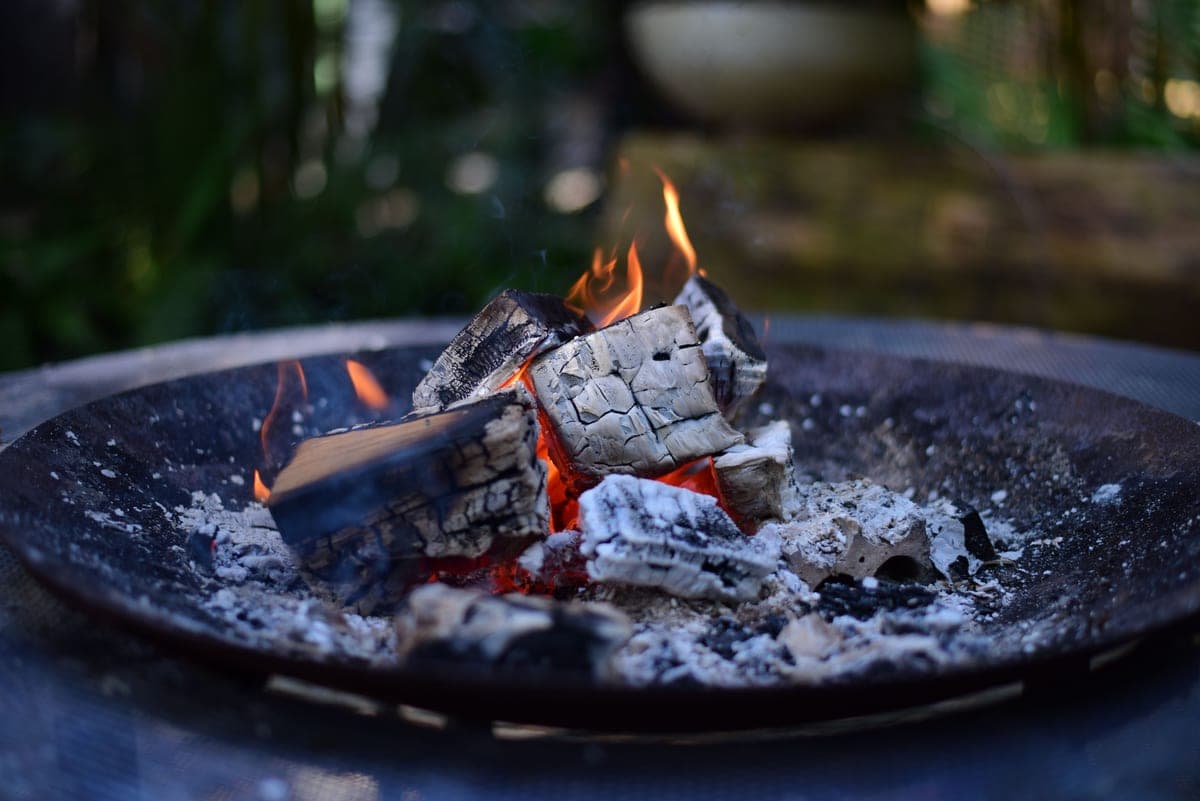
The Best Fire Pit Stands and Bases
Five verified stands and bases on fit range and published material — and why a stand does the job a mat cannot.
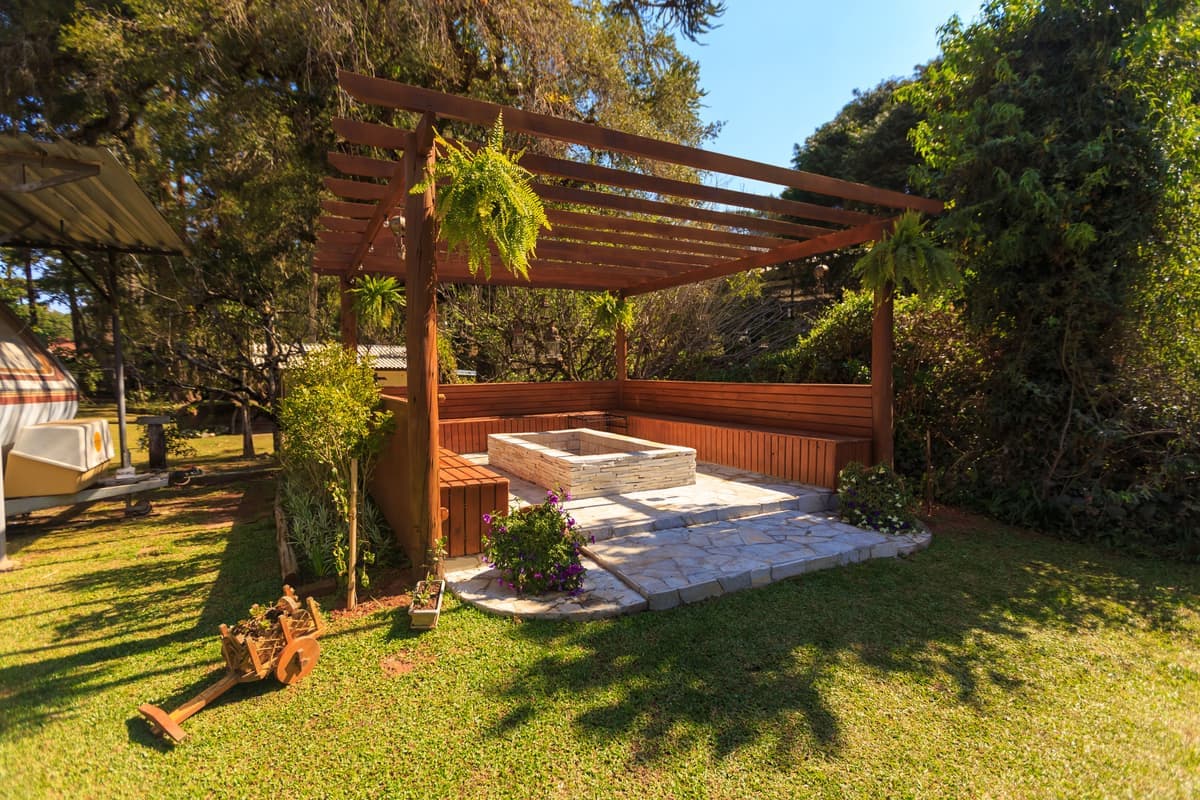
Fire Pits Under a Gazebo or Pergola
What the code and the manufacturers say about a fire under a gazebo, pergola or canopy — and which formats make it defensible.

The Best Fire Pit Mats for a Deck
Five verified mats ranked on size, shape and layer count — and why a mat alone does not protect a deck.

What Size Fire Pit Do I Need?
Size is set by the clear circle you can achieve, not the pit's footprint. How to measure it, and what each diameter buys.
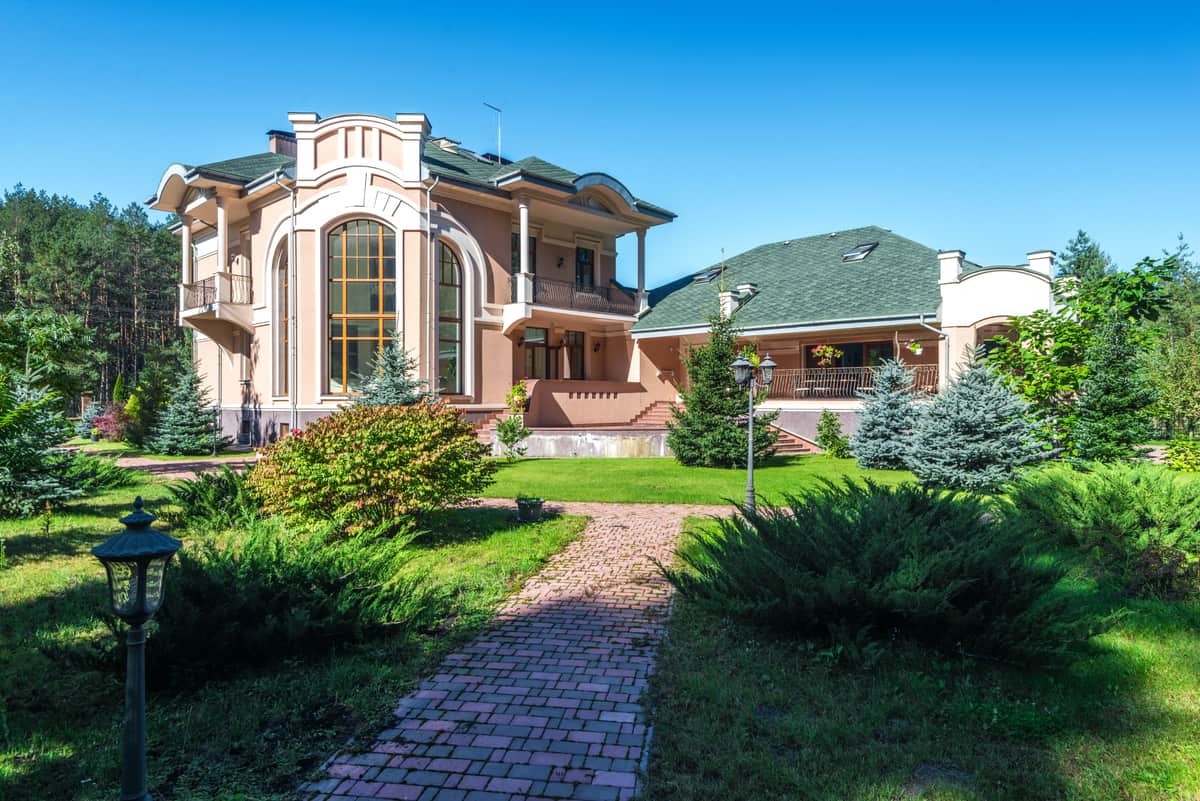
The Best Fire Pits for a Backyard
Six pits ranked for open ground, where diameter and permanence matter more than clearance.
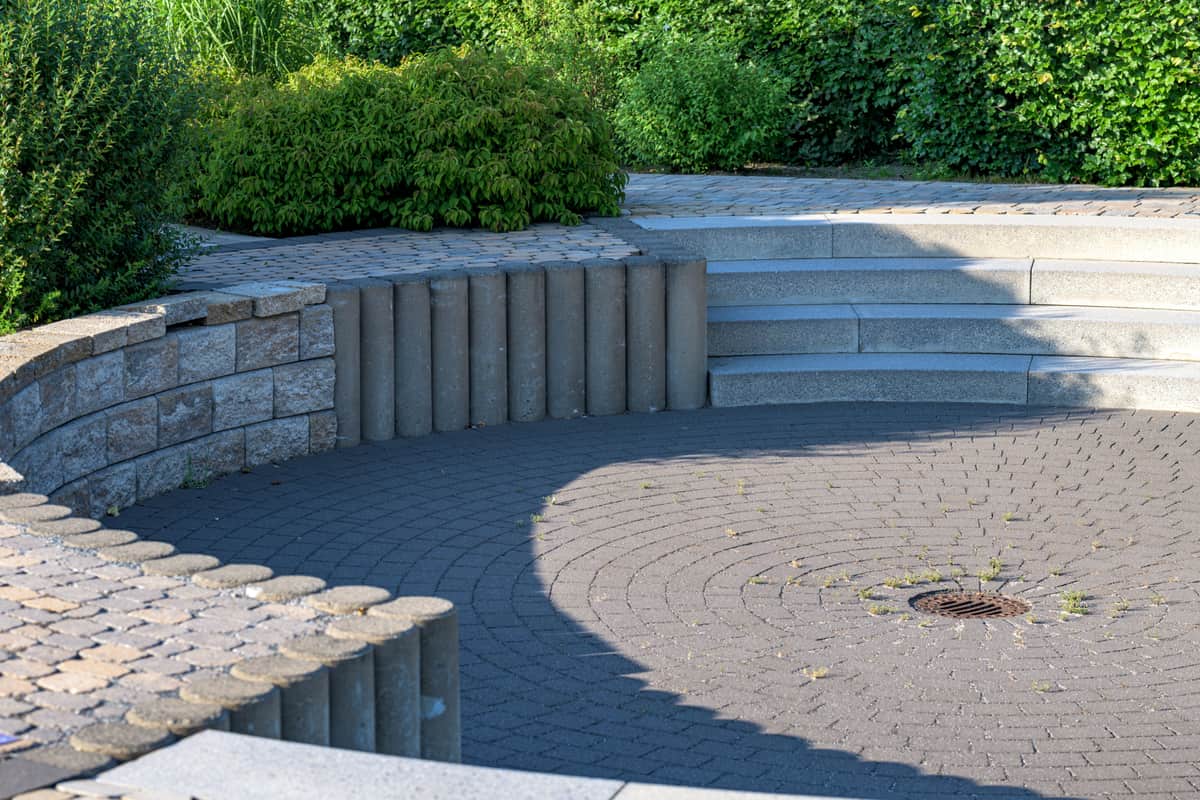
The Best Fire Pits for a Patio
Six fire pits ranked on the three things a patio actually decides: surface damage, achievable clearance and embers.
How Far Should a Fire Pit Be From a House?
The clearance table by fuel and obstruction, with both code sections quoted and the residential exception explained.

Fire Pits on a Deck
What a heat barrier has to do, why composite is worse than wood, and which pits are defensible on a deck.
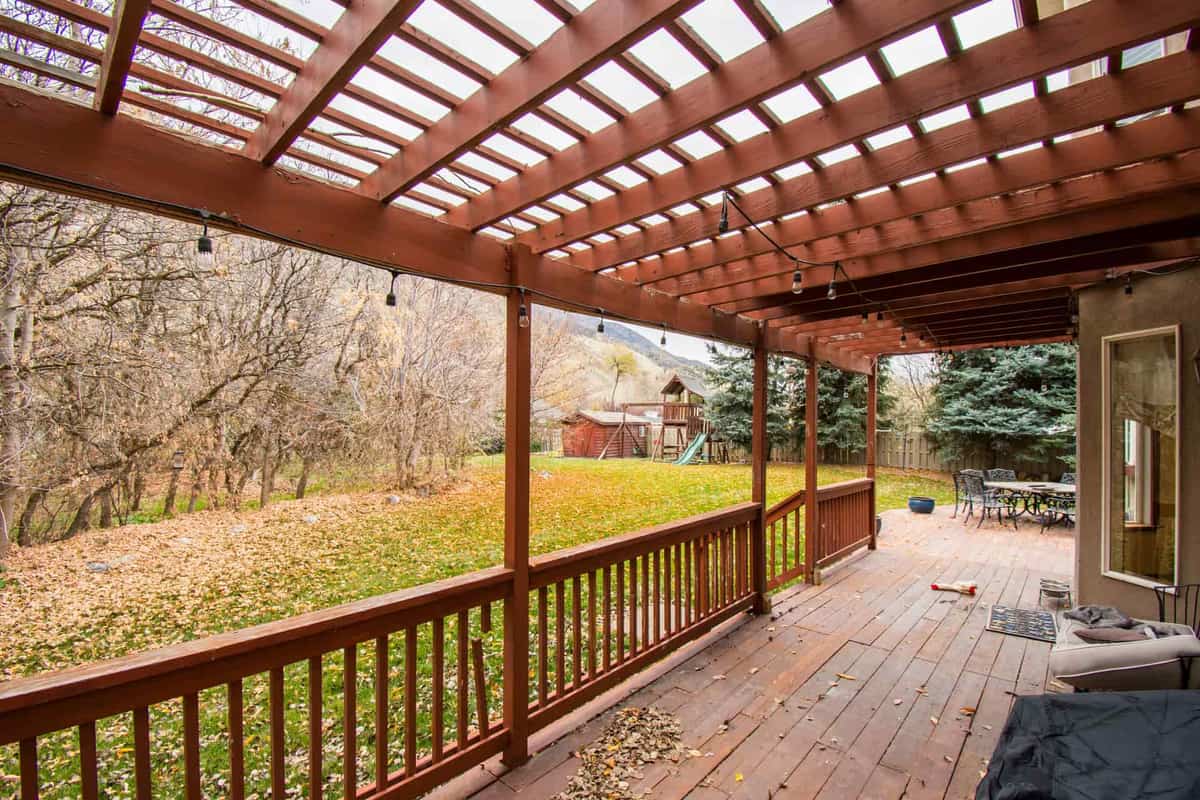
Fire Pits Under a Covered Patio
Why solid fuel is out under a roof, when gas is acceptable, and the ventilation question nobody raises.
Fire Pits on Grass
Why grass dies under a pit, how deep the heat goes, and what to do about dry-season embers.

Fire Pit Surfaces and Pads
Spalling, stone that fractures, and how to build a pad that lasts. By material.

Fire Pits on an Apartment Balcony
Why the answer is almost always no — fire code, lease, insurer and physics — and what is allowed instead.
Read it
Fire Pits With Kids and Pets
Why the burn risk peaks after the fire is out, plus layout, barriers and what dogs do that children do not.
Read it
How to Put Out a Fire Pit
Drown, stir, drown — plus the dry method, and why the pit stays dangerous for hours.
Read itPrices come from Amazon and change without notice. Where no live price is showing, the buttons read “check price” rather than a number we cannot stand behind. How this site is funded.