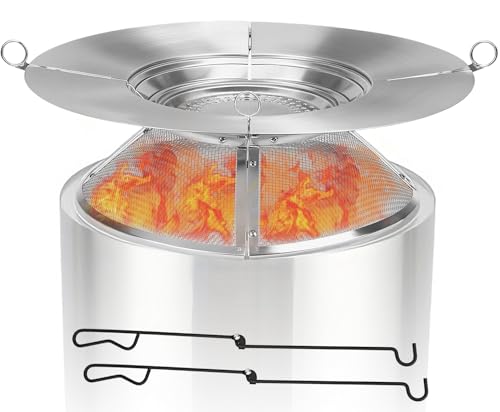
Solo Stove Bonfire 2.0
Solo StoveThe default smokeless pit: 19.5 in of 304 stainless, light enough for one person to move, and the only unit in this set whose ash pan makes cleanup a 30-second job.
Why it wonEvery pick here is ranked on published specifications: alloy and gauge, chamber diameter, burner rating, weight and warranty. The arithmetic is shown, the prices are pulled live, and where a maker publishes nothing the page says so.

Each of these won a different comparison. The category is the specific roundup, not the section it lives in.
Solo Stove Bonfire 2.0
Solo StoveThe default smokeless pit: 19.5 in of 304 stainless, light enough for one person to move, and the only unit in this set whose ash pan makes cleanup a 30-second job.
Why it wonOutland Living Firebowl 893 Deluxe
Outland Living58,000 BTU, CSA-certified, and the pit most often accepted where wood fires are not. The cover and carry kit are in the box, which is why this is the one to buy over the bare 823.
Why it wonEndless Summer 30 in Gas Fire Pit Table
Endless SummerA 30 in table whose base swallows the 20 lb cylinder. That is the entire point of a fire table, and it is the reason to pay the premium over a bowl.
Why it wonBreeo X Series 24
Breeo62 lb of corten meant to stay where you put it, with a rim designed as a cooking surface. The heaviest pit here and the only one built around a searing ring.
Why it wonSunnydaze Fire Pit Ring Insert, 36 in
SunnydazeA 2 mm steel liner for a hole in the ground. The cheapest real fire pit there is, and the shape the recreational-fire definition was written around.
Why it wonFireside Outdoor Pop-Up Fire Pit, 24 in
Fireside Outdoor7 lb, folds flat, and holds the fire on a mesh above the ground, which is exactly what a leave-no-trace or elevated-fire rule requires.
Why it wonThree fuels, the comparison that routes between them, and the two questions that decide whether you can use any of it: where it can sit, and what your jurisdiction allows.

Double-wall pits from Solo Stove, Breeo, TIKI and BioLite, ranked on alloy, gauge and published warranty.

Certified propane bowls and fire tables, with burn hours per 20 lb tank worked out from the published BTU ratings.

Fire rings, cast-iron bowls and packable camp pits, ranked on steel and published dimensions.

The fuel decision worked through on cost, legality, heat and placement — then routed to the right hub.

Clearance distances by fuel and obstruction, plus decks, grass, covered patios and what a heat barrier actually has to do.

Permits, recreational-fire definitions, burn bans and HOA covenants — the three layers that decide whether you can light it.
Everyone in this category tells you they tested twenty fire pits. We have not tested any, and we say so on every page. What we do instead is compile what the manufacturers actually publish — alloy, gauge, chamber diameter, burner rating, weight, warranty term and what that warranty excludes — cite each figure to its source, and do the arithmetic nobody else has bothered to do.
That arithmetic is the point. Not one competitor we examined publishes burn hours per propane tank by BTU rating, and it is a two-line calculation from figures the US Department of Energy publishes. Not one publishes steel gauge and alloy per model. Those are the numbers that decide what a fire pit costs to run and how long it lasts, and they need no test lab — only the willingness to look them up and show the working.
The method is published in full, including what it cannot tell you: how we research. Where a maker publishes nothing, the spec row says so. Where a figure circulates without a method behind it — every smoke-reduction percentage in this category — we leave it out rather than repeat it.
Clearance, running cost, what smokeless actually means, and the definition every permit question turns on.

The clearance table by fuel and obstruction, with both code sections quoted and the residential exception explained.
Read it
Burn hours per 20 lb tank at every common BTU rating, computed from the DOE energy figures with the formula shown.
Read it
Secondary combustion, the three conditions it needs, and the reason we will not quote a smoke-reduction percentage.
Read it
The code definition quoted, the 3 ft threshold, and why a manufactured pit is a different category.
Read itRing & Ember is a participant in the Amazon Services LLC Associates Program and earns a commission from qualifying purchases made through the links on this site, at no extra cost to you. Amazon is currently the only retailer we earn from — we have joined no other affiliate network, and links to brand-direct stores earn us nothing.
What we recommend is not affected by what pays. Prices render only from a live data feed and disappear when they go stale rather than showing you a number we cannot stand behind. Read the full disclosure and the editorial policy.