Fire Glass vs Lava Rock
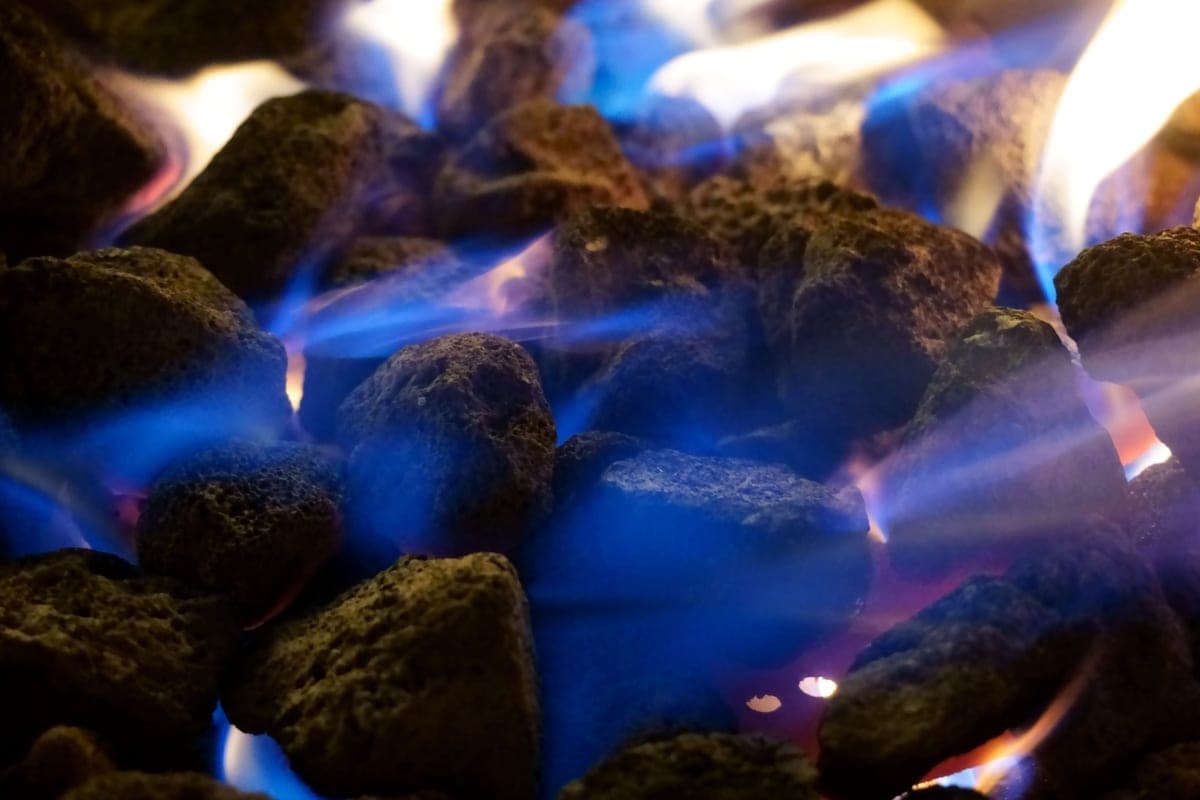
Both exist to spread the gas evenly and hide the burner. One is cheap, porous and holds water; the other is expensive, dense and reflects the flame. Most pits are best with both.
DisclosureWe earn a commission when you buy through the links on this page, at no extra cost to you. Prices come from Amazon and change without notice. How this site is funded.
Use lava rock as the base and fire glass as the top inch, which is what most gas pits should have. If you buy one thing, make it the GASPRO lava rock — it is the only product in this comparison that publishes a temperature rating (2000 F) and states it has been pre-treated to lower burst risk. If the pit is a centerpiece and you want the reflective look, the GASPRO 20 lb fire glass beads are the sensible way to buy glass, because 3/4 in pieces fill a pan with less weight than half-inch does. Pure fire glass throughout a deep pan is the one choice that is almost always a waste of money.
They are doing the same job
A gas burner on its own is an ugly ring of ports with blue jets coming out of it. Media does three things: it hides the hardware, it spreads the gas so the flame comes up as a broad sheet rather than a row of spikes, and it holds heat so the flame has something to radiate off. Both materials do all three.
So the choice is not functional. It is about cost, appearance and how the material behaves over a few wet seasons.
The comparison
| Fire glass | Lava rock | |
|---|---|---|
| Cost per pound | Roughly two to three times lava rock | The cheapest fire media there is |
| Appearance lit | Reflects and scatters the flame | Glows dull red, absorbs light |
| Appearance unlit | Looks like a deliberate surface | Looks like gravel |
| Weight per volume | Denser — more pounds to fill a pan | Lighter and more porous — fewer pounds |
| Porosity | None. Water sits on it and runs off | High. Holds water inside the stone |
| Soot visibility | Shows every mark | Hides it completely |
| Cleaning | Rinse and dry; it comes back | Effectively never — it looks the same dirty |
| Published heat rating | 1300 F on one maker's care sheet | 2000 F on one listing; none on the rest |
The porosity row is the one that matters operationally. Everything else is preference and budget.
The rain problem, and why it favours a base of lava
Lava rock is porous by nature — that is the whole reason it is used rather than ordinary stone. The open structure means that when it gets hot, any water inside has a route out as steam instead of building pressure in a sealed pocket. It is the same property that makes it safe and the property that makes it hold water in the first place.
In practice that means an uncovered gas pit full of lava rock will sit damp for a while after rain and will hiss and steam for the first few minutes of a burn. It is normal. The thing to avoid is the opposite case: non-porous landscaping stone, river rock or pea gravel, which can take water into closed voids and fracture when heated. That is the one genuinely unsafe substitution in this category, and it is the reason the lava-rock-or-fire-glass question has only those two answers.
How deep should it go?
Deep enough to hide the burner and spread the gas, shallow enough not to choke it. MSI, one of the fire glass makers, publishes a minimum of 2 inches over the burner in its own care instructions, with the stated reason being that it 'allows the gas to filter evenly through the fire glass'. The same sheet gives fire glass a heat rating of 1300 degrees Fahrenheit.
The symptoms of getting it wrong are easy to read. Too little media and the flame comes out as distinct blue spikes from individual ports. Too much and the flame is low, lazy and sooty because the gas cannot get through. If you are seeing soot on a gas pit, depth is the first thing to check — see the BTU guide for why burner rating is not the variable people assume it is.
How we judged these
- Compared on what the listings actually publish — piece size, quantity, and in one case a temperature rating. In this category almost nothing is published, so the makers that do publish are credited for it.
- Then on cost per pound and coverage, because fire media is bought by weight and used by volume, and larger pieces fill more pan per pound.
- Then on what happens in the rain, which is the real operational difference between a porous stone and a solid one.
- Depth guidance is taken from a manufacturer's own published care sheet and labeled as such. The burner manual for your own pit overrides it.
- What we did not do: burn any of this, measure a flame, or test a thermal-shock claim. Where a maker publishes no heat rating — which is most of them — the spec row says so.
We have not burned any of these units, and we do not claim to have. The full method, including what it cannot tell you.
The layering approach, and what it saves
The arrangement that makes sense for most pits is simple: lava rock up to about an inch below the finished level, then fire glass for the visible top inch. The lava does the bulk filling at the lowest cost per pound. The glass does the part you can see.
- A deep pan is mostly invisible volume. Nobody can see four inches down. Paying glass prices for it is paying for something that is never looked at.
- The fine glass grades are best as a top dressing. Quarter-inch glass packs level and reads as a solid surface over a coarse base.
- Top up the glass, not the whole pan. When the top layer looks tired, a single 10 lb bag refreshes the visible surface.
- Keep the two separable if you can. Mixed media is harder to clean than layered media, because the glass is the part you would want to rinse.
Which to buy
| # | Product | Best for | Key spec | Price |
|---|---|---|---|---|
| 1 | 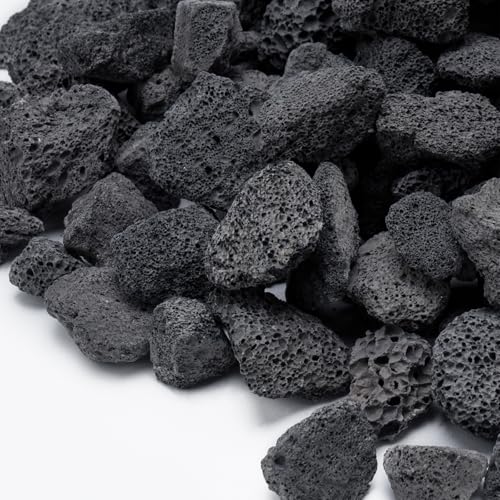 GASPRO Large Lava Rock, 10 lb, 1-3 inThe only product in this comparison that publishes a heat figure — resistant to 2000 F — and states it has been pre-treated to lower burst risk. On a category where nobody publishes anything, that is the whole argument. | The one media here with a published temperature rating | Volcanic lava rock | $29.99 · View on Amazon |
| 2 | 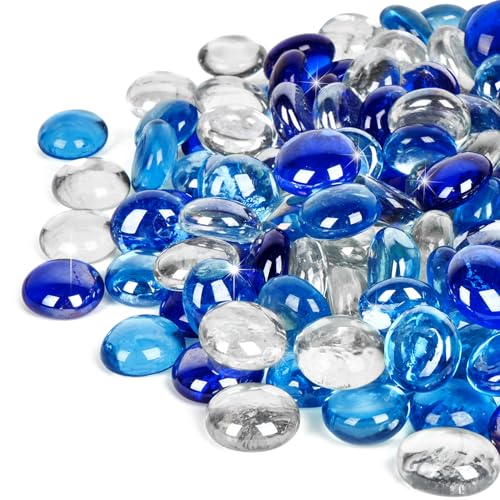 GASPRO Fire Glass Beads, 20 lb, 3/4 inThree-quarter-inch beads in a 20 lb bag. The larger piece size means fewer pounds to fill the same pan, which is why this is the sensible buy for a 30 in table rather than two bags of half-inch. | Filling a full-size fire table | Tempered glass beads | $45.99 · View on Amazon |
| 3 |  Premium Pebbles Black Lava Rock, 20 lb, 1-2 inTwenty pounds of 1 to 2 in black lava in one bag. It is the straightforward bulk buy for a large pan, and at this piece size it fills without the gravel look that finer lava has. | Bulk filling a large burner pan | Volcanic lava rock | $47.99 · View on Amazon |
| 4 | 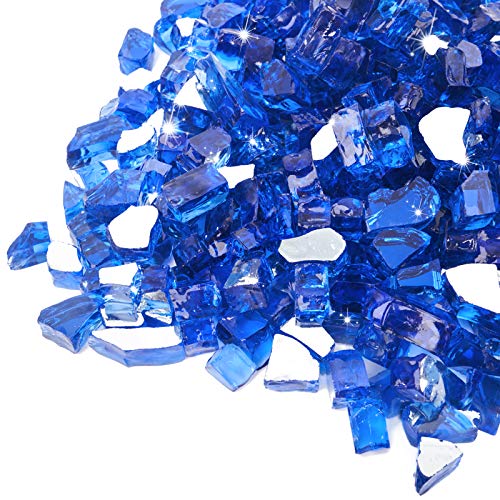 GASPRO Fire Glass, 10 lb, 1/2 inHalf-inch reflective tempered glass in a 10 lb bag — the standard size and the standard quantity, which makes it the default way into fire glass without over-buying for a bowl you have not measured. | A first layer on a small burner | Reflective tempered glass | $26.99 · View on Amazon |
| 5 |  Onlyfire Fire Glass Rocks, 10 lb, 1/4 inQuarter-inch glass is the fine grade. It packs tighter than half-inch and reads as a solid surface rather than loose stones, which is what you want as a thin finishing layer over lava rock underneath. | A dense top dressing over a cheaper base | Reflective tempered glass | $24.69 · View on Amazon |
| 6 | 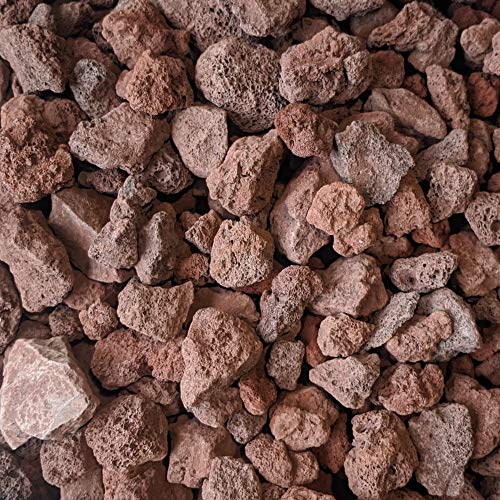 Midwest Hearth Red Lava Rock, 10 lbNatural red volcanic stone, 1/2 to 2 in, 10 lb, and no claims beyond that. It is the least expensive media in this comparison and the listing does not pretend otherwise. | The cheapest honest bag | Natural volcanic stone | $18.95 · View on Amazon |
Prices are pulled live from Amazon. Where no live price is showing, the button reads “check price” rather than a number we cannot stand behind.
GASPRO Large Lava Rock, 10 lb, 1-3 in
GASPROThe only product in this comparison that publishes a heat figure — resistant to 2000 F — and states it has been pre-treated to lower burst risk. On a category where nobody publishes anything, that is the whole argument.
The only product in this comparison that publishes a heat figure — resistant to 2000 F — and states it has been pre-treated to lower burst risk. On a category where nobody publishes anything, that is the whole argument.
- A published temperature rating, which nothing else in this set offers
- Pre-treated for burst risk — lava rock holds water, and trapped water is the failure mode
- Large pieces fill a pan fast, so 10 lb goes further than 10 lb of half-inch glass
- Black lava rock looks like gravel when the burner is off, which is most of the time
- Porous stone still absorbs rain; pre-treated reduces the risk, it does not remove it
- No published density, so you cannot calculate how many bags a given pan needs
Anyone who wants gas media and cares more about the published safety figure than the look.
The pit is a centerpiece and you want it to look like something when it is cold.
We have not burned this unit. These are the things a specification sheet cannot answer, listed rather than glossed over.
- What the pre-treatment is
- Bulk density, so coverage per bag has to be found by trial
#ad how we are funded · price as of October 18, 2026
GASPRO Fire Glass Beads, 20 lb, 3/4 in
GASPROThree-quarter-inch beads in a 20 lb bag. The larger piece size means fewer pounds to fill the same pan, which is why this is the sensible buy for a 30 in table rather than two bags of half-inch.
Three-quarter-inch beads in a 20 lb bag. The larger piece size means fewer pounds to fill the same pan, which is why this is the sensible buy for a 30 in table rather than two bags of half-inch.
- Larger pieces fill a given depth with less weight, so the per-table cost is lower than it looks
- 20 lb is a realistic single-purchase quantity for a standard fire table
- Bead shape has no sharp edges, which matters if children are around the table
- No published temperature rating
- Three-quarter-inch beads look coarse on a small tabletop burner
- Mixed color is a decision you cannot undo without buying again
Owners of a 28 to 36 in gas fire table doing the fill in one go.
Your burner is a small tabletop unit — the pieces are out of scale with the pan.
We have not burned this unit. These are the things a specification sheet cannot answer, listed rather than glossed over.
- Rated temperature
- The exact color mix, which the listing does not break down
#ad how we are funded · price as of October 18, 2026
Premium Pebbles Black Lava Rock, 20 lb, 1-2 in
Premium PebblesTwenty pounds of 1 to 2 in black lava in one bag. It is the straightforward bulk buy for a large pan, and at this piece size it fills without the gravel look that finer lava has.
Twenty pounds of 1 to 2 in black lava in one bag. It is the straightforward bulk buy for a large pan, and at this piece size it fills without the gravel look that finer lava has.
- 20 lb in one bag, which is the quantity a full-size pan actually needs
- 1 to 2 in is the middle grade — fills quickly without looking like driveway stone
- Rated by the listing for both indoor gas fireplaces and outdoor pits
- No temperature rating and no pre-treatment claim, unlike the GASPRO lava
- Untreated porous rock is the classic candidate for trapping rainwater
- Decorative-stone listing, so the fire use is one application among several
A large gas table or bowl being filled from empty.
The pit lives uncovered in a wet climate and you want the pre-treated stone instead.
We have not burned this unit. These are the things a specification sheet cannot answer, listed rather than glossed over.
- Rated temperature
- Whether it has had any moisture treatment at all
#ad how we are funded · price as of October 18, 2026
GASPRO Fire Glass, 10 lb, 1/2 in
GASPROHalf-inch reflective tempered glass in a 10 lb bag — the standard size and the standard quantity, which makes it the default way into fire glass without over-buying for a bowl you have not measured.
Half-inch reflective tempered glass in a 10 lb bag — the standard size and the standard quantity, which makes it the default way into fire glass without over-buying for a bowl you have not measured.
- Half an inch is the size most burner pans are designed around, so coverage behaves predictably
- Reflective finish is what people actually want fire glass for — it throws the flame back
- 10 lb is enough to test the look on a tabletop or small bowl without committing
- No published temperature rating, which is the one safety figure that matters on gas media
- 10 lb covers very little on a 30 in table; you will be buying several bags
- Reflective glass shows soot more obviously than lava rock does
Tabletop gas pits and small bowls, or anyone trying the look before committing.
You have a full-size fire table. Buy by the 20 lb bag or you will pay more per pound.
We have not burned this unit. These are the things a specification sheet cannot answer, listed rather than glossed over.
- Rated temperature and whether it is tempered to a published standard
- How it holds color after a season of soot and cleaning
#ad how we are funded · price as of October 18, 2026
Onlyfire Fire Glass Rocks, 10 lb, 1/4 in
onlyfireQuarter-inch glass is the fine grade. It packs tighter than half-inch and reads as a solid surface rather than loose stones, which is what you want as a thin finishing layer over lava rock underneath.
Quarter-inch glass is the fine grade. It packs tighter than half-inch and reads as a solid surface rather than loose stones, which is what you want as a thin finishing layer over lava rock underneath.
- The fine grade packs level, so a thin layer covers properly instead of showing the pan
- Works as a top dressing over cheaper base media, which is the cheapest way to a glass look
- High-lustre finish is explicitly published rather than implied
- No published temperature rating
- Fine glass restricts gas flow more than coarse media if you bed it too deep
- The listing also pitches it for vases and aquariums, which tells you it is not a fire-specific product line
Anyone layering a visible top surface over an unglamorous base.
You want the whole pan filled with glass — at this grade it is an expensive way to do it.
We have not burned this unit. These are the things a specification sheet cannot answer, listed rather than glossed over.
- Rated temperature
- Maximum safe depth before it chokes the burner, which no fire glass listing states
#ad how we are funded · price as of October 18, 2026
Midwest Hearth Red Lava Rock, 10 lb
Midwest HearthNatural red volcanic stone, 1/2 to 2 in, 10 lb, and no claims beyond that. It is the least expensive media in this comparison and the listing does not pretend otherwise.
Natural red volcanic stone, 1/2 to 2 in, 10 lb, and no claims beyond that. It is the least expensive media in this comparison and the listing does not pretend otherwise.
- The lowest outlay of any media here
- Mixed 1/2 to 2 in grading packs better than a single size, with fines filling between the large pieces
- Red lava reads warmer than black when the burner is off
- No temperature rating and no treatment claim
- Mixed grading means some pieces are small enough to drop through a coarse burner grate
- 10 lb will not fill a full-size table
A small bowl, or a base layer under glass.
You need a published heat figure — only the GASPRO lava gives one.
We have not burned this unit. These are the things a specification sheet cannot answer, listed rather than glossed over.
- Rated temperature
- Proportion of fines in the bag
#ad how we are funded · price as of October 18, 2026
What we would skip
- Filling a deep pan entirely with fire glass
It is the most expensive possible way to fill a volume nobody can see. Lava rock underneath and an inch of glass on top looks identical from a chair and costs a fraction as much.
- Ordinary landscaping gravel, river rock or pea gravel
Non-porous stone that has absorbed water into closed pockets can fracture violently when heated. Lava rock is used in fire pits specifically because its open structure lets steam escape. This is the one substitution in this category that is genuinely unsafe, not merely a bad look.
- Burying the burner ports
Media packed over the ports chokes the gas, drops the flame and makes it sooty. The burner manufacturer's manual sets the depth, and it is the only document that applies to your pit.
- Glass marketed for aquariums and vases as fire media
Several listings in this category pitch the same product for fire pits, flower vases and fish tanks. Decorative glass that has not been tempered for fire use does not belong over a burner.