Fire Pit Rust and Maintenance
Almost every fire pit that dies, dies of corrosion from the inside. The cause is wet ash sitting against metal, and the fix takes about two minutes.
DisclosureWe earn a commission when you buy through the links on this page, at no extra cost to you. Prices come from Amazon and change without notice. How this site is funded.
Ash is hygroscopic — it pulls moisture out of the air and holds it against the metal, and wood ash is alkaline. Leaving ash in a pit between burns is what kills most fire pits. Empty it when cool, keep the pit covered or drained, and the material will look after itself.
Ash is the problem, not rain
People cover their fire pits to keep rain out and then leave a bed of ash inside all winter. That is backwards. Wood ash absorbs atmospheric moisture readily and stays damp long after the surface looks dry, and it is chemically alkaline. A layer of damp alkaline ash held in permanent contact with steel is a far more aggressive environment than occasional rain on a clean, draining pit.
This is why fire pits corrode from the inside out and why the base is almost always the first place to go. It is also why the fix is so simple: empty it. Not after every fire necessarily, but before any period of disuse and certainly before winter.
The routine, in full
- 1Let it cool completely. Ash stays hot far longer than seems reasonable — many hours, sometimes into the next day. Putting a fire out properly.
- 2Empty the ash into a metal container with a lid, kept away from the house and anything combustible, for at least 24 hours before disposal.
- 3Brush out the residue. A stiff brush is enough. There is no need to wash it.
- 4Let it drain and dry. Water sitting in the base is the second-biggest cause of corrosion after ash.
- 5Cover it, or leave it draining. A cover that traps moisture is worse than no cover. If your cover is not breathable and the pit does not drain, leave it uncovered.
What differs by material
304 stainless
Needs nothing. The passive oxide layer is self-maintaining, and heat tinting — straw, bronze, blue near the fire — is cosmetic and permanent. If you want it to look newer, a stainless cleaner will lift surface deposits; it is entirely optional. The one thing worth doing in coastal air is rinsing salt deposits off occasionally, because chloride is the one thing stainless does not shrug off.
Corten
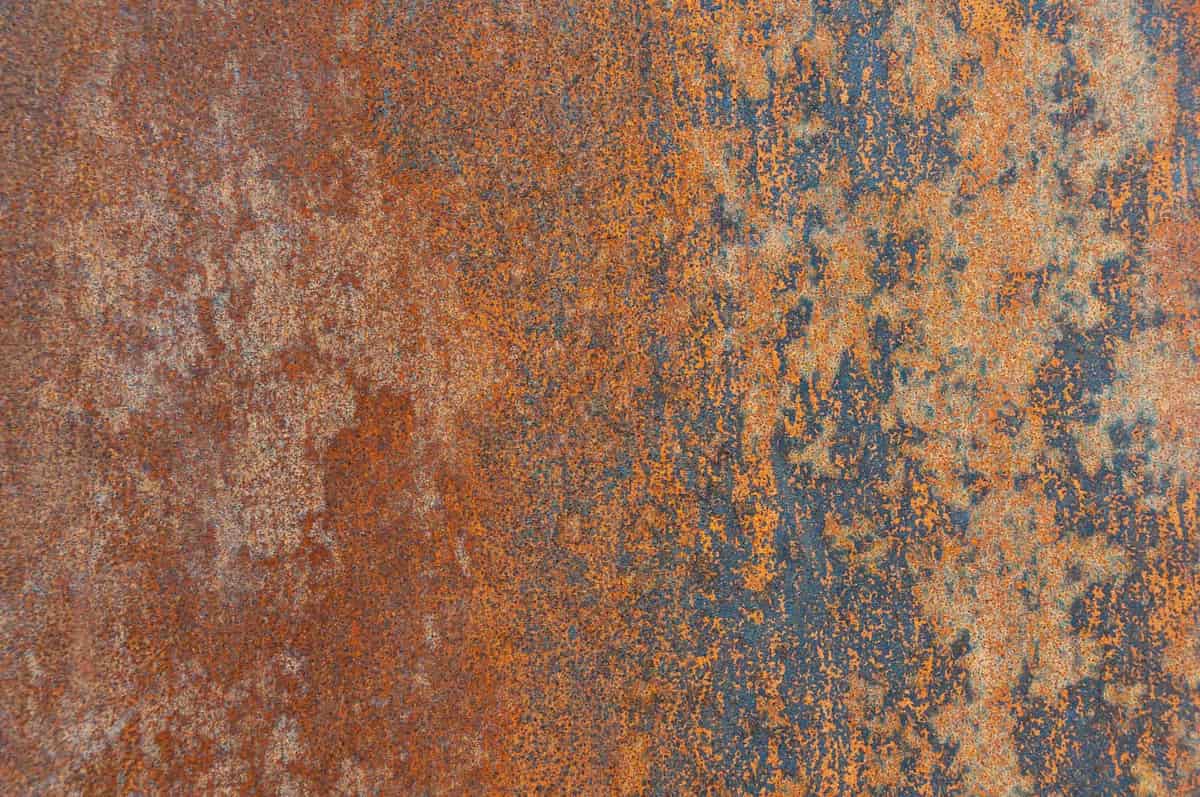
Needs nothing, and specifically must not be sealed or painted. The rust is the protection. What you should do is manage where the runoff goes — put it on gravel or grass, not on a surface where a stain matters, and accept the stain if it is already there. Corten vs stainless.
Cast iron
Will surface-rust everywhere and that is normal for an oxidized-finish bowl. Keep it dry between uses and it will outlast almost anything. Some owners wipe the interior with a high-smoke-point oil after cleaning, as with cookware; it slows surface rust and is not required.
Painted and powder-coated steel
This is the one that genuinely benefits from maintenance, because the coating is the only thing protecting the steel. Expect the finish to fail over the hottest part of the pit within a few seasons. When it does, wire-brush the loose material back to sound metal and repaint with a high-temperature paint rated well above what a wood fire reaches. Doing that once a year roughly doubles the useful life of a cheap pit.
Things that do not help
- Sealing corten. It prevents the patina forming properly and it will fail unevenly. The material is designed to be left alone.
- Painting the inside of any pit. It burns off immediately and you have wasted an afternoon.
- Sand in the base 'to protect it'. Sand holds moisture against the metal, which is the mechanism you are trying to avoid. It is useful under a ring for drainage, not inside a bowl.
- A non-breathable cover on a wet pit. It traps moisture and accelerates exactly what you were preventing.
- Pressure washing. It drives water into seams and does nothing brushing would not.
Winter storage
Empty it, dry it, and either bring it indoors or leave it outside with the drain clear and either uncovered or under a breathable cover. A stainless or corten pit is perfectly happy outdoors all winter provided it is empty and draining. A painted pit does noticeably better under cover, because the coating is what you are protecting.
Three materials, three routines
| # | Product | Best for | Key spec | Price |
|---|---|---|---|---|
| 1 |  Solo Stove Bonfire 2.0The default smokeless pit: 19.5 in of 304 stainless, light enough for one person to move, and the only unit in this set whose ash pan makes cleanup a 30-second job. | Most backyards | 304 stainless steel | $349.99 · View on Amazon |
| 2 |  Breeo X Series 2462 lb of corten meant to stay where you put it, with a rim designed as a cooking surface. The heaviest pit here and the only one built around a searing ring. | Cooking and permanence | Corten weathering steel | $599.00 · View on Amazon |
| 3 | SunnydazeNo listing found Sunnydaze 24 in Cast Iron Fire Pit BowlCast iron with handles, oxidized rather than painted. It will outlast every powder-coated bowl at this price, and it weighs what cast iron weighs. | Above-ground, no assembly | Cast iron, oxidized finish | Check price on Amazon |
Prices are pulled live from Amazon. Where no live price is showing, the button reads “check price” rather than a number we cannot stand behind.
Solo Stove Bonfire 2.0
Solo StoveThe default smokeless pit: 19.5 in of 304 stainless, light enough for one person to move, and the only unit in this set whose ash pan makes cleanup a 30-second job.
The default smokeless pit: 19.5 in of 304 stainless, light enough for one person to move, and the only unit in this set whose ash pan makes cleanup a 30-second job.
- 304 stainless resists the pitting that kills painted carbon-steel pits in two seasons
- Removable ash pan and base plate, so the cleanup path is genuinely short
- Light enough that one person moves it off a deck before a storm
- The largest accessory range in the category, so a cooking or lid upgrade exists later
- 17.5 in of usable chamber means standard 16 in firewood often needs splitting down
- The warranty excludes rust, which is the failure mode most owners actually hit
- Published weight varies by 3 lb across retail listings for the same product
A patio or backyard where the pit gets moved a few times a season and cleanup speed matters more than raw fire volume.
You burn full 16 in splits without cutting them down, or you want a pit that doubles as a cooking surface. The Breeo does that better.
We have not burned this unit. These are the things a specification sheet cannot answer, listed rather than glossed over.
- How much smoke reduction you get in practice. It depends on wood moisture, wind and load, and no published figure covers your yard
- Long-run finish durability on the ceramic-coated colorways
- Real burn time on a full load. OutdoorGearLab's 60-minute figure is one test, not a specification
#ad how we are funded · price as of October 18, 2026
Breeo X Series 24
Breeo62 lb of corten meant to stay where you put it, with a rim designed as a cooking surface. The heaviest pit here and the only one built around a searing ring.
62 lb of corten meant to stay where you put it, with a rim designed as a cooking surface. The heaviest pit here and the only one built around a searing ring.
- Corten forms a stable oxide layer instead of pitting through, which is why it is sold uncoated
- The rim is a genuine cooking surface with a searing-ring accessory, not a marketing line
- Made in Pennsylvania, which is verifiable and unusual in this category
- 62 lb means it is placed once. Check clearance before, not after
- Corten stains whatever it sits on. Concrete and pavers underneath will discolor
- Nothing about the finish is warranted, because the finish is rust
A permanent spot on gravel or grass where the pit is part of the yard, and someone who will actually cook on it.
The pit has to live on a finished patio, a deck, or anywhere a runoff stain matters. Stainless is the answer there.
We have not burned this unit. These are the things a specification sheet cannot answer, listed rather than glossed over.
- How fast the patina stabilizes in your climate. Humid and coastal air behave differently and Breeo does not publish a timeline
- Whether the heat-output figures circulating for this pit come from a standard test. We found no published method behind them
#ad how we are funded · price as of October 18, 2026
- 1.Amazon listing — Breeo X Series 24 Corten
- 2.Ace Hardware listing — Breeo X Series 24 dimensions, origin and warranty
- 3.Breeo — Limited Lifetime Warranty: free from workmanship and material defects for the lifetime of the original purchaser, and warrants no rust through or burn through for a period of three (3) years from purchase; rust, paint and finish otherwise excluded
Sunnydaze 24 in Cast Iron Fire Pit Bowl
SunnydazeCast iron with handles, oxidized rather than painted. It will outlast every powder-coated bowl at this price, and it weighs what cast iron weighs.
Cast iron with handles, oxidized rather than painted. It will outlast every powder-coated bowl at this price, and it weighs what cast iron weighs.
- Cast iron does not burn through the way thin sheet steel does
- An oxidized finish has nothing to flake, unlike paint
- Handles on both sides, which sounds trivial until you move a hot pit
- 5 in of depth is shallow, so embers and ash spill more readily than in a deep chamber
- Cast iron will surface-rust in any climate. That is normal and it is also permanent
- No published warranty term
Someone who wants an above-ground wood fire with no assembly and no coating to fail.
The pit sits on a surface that cannot take rust marks.
We have not burned this unit. These are the things a specification sheet cannot answer, listed rather than glossed over.
- Wall thickness, which Sunnydaze does not publish for this bowl
#ad how we are funded · price as of October 18, 2026
- Picks are chosen as the three materials this advice differs for: stainless, corten and cast iron.
- Ranked on published construction, as everywhere else.
- What we did not do: run any corrosion test or maintain any of these over time.
We have not burned any of these units, and we do not claim to have. The full method, including what it cannot tell you.