Corten vs Stainless
One is designed to rust and outlast you. The other is designed never to rust and can go on a deck. The ground underneath usually makes this decision for you.
DisclosureWe earn a commission when you buy through the links on this page, at no extra cost to you. Prices come from Amazon and change without notice. How this site is funded.
Choose corten if the pit lives permanently on gravel or grass — it will likely outlast stainless there and needs no maintenance. Choose 304 stainless if the pit moves, sits on a deck, patio or any finished surface, or lives near the coast. Corten stains what it sits on, permanently.
They fail in opposite directions
Stainless resists corrosion. Chromium in the alloy forms a passive oxide film that reforms when damaged, so there is nothing to maintain and nothing to fail. It works until chloride gets involved: salt air and road salt attack that film locally, producing pitting that no warranty in this category covers.
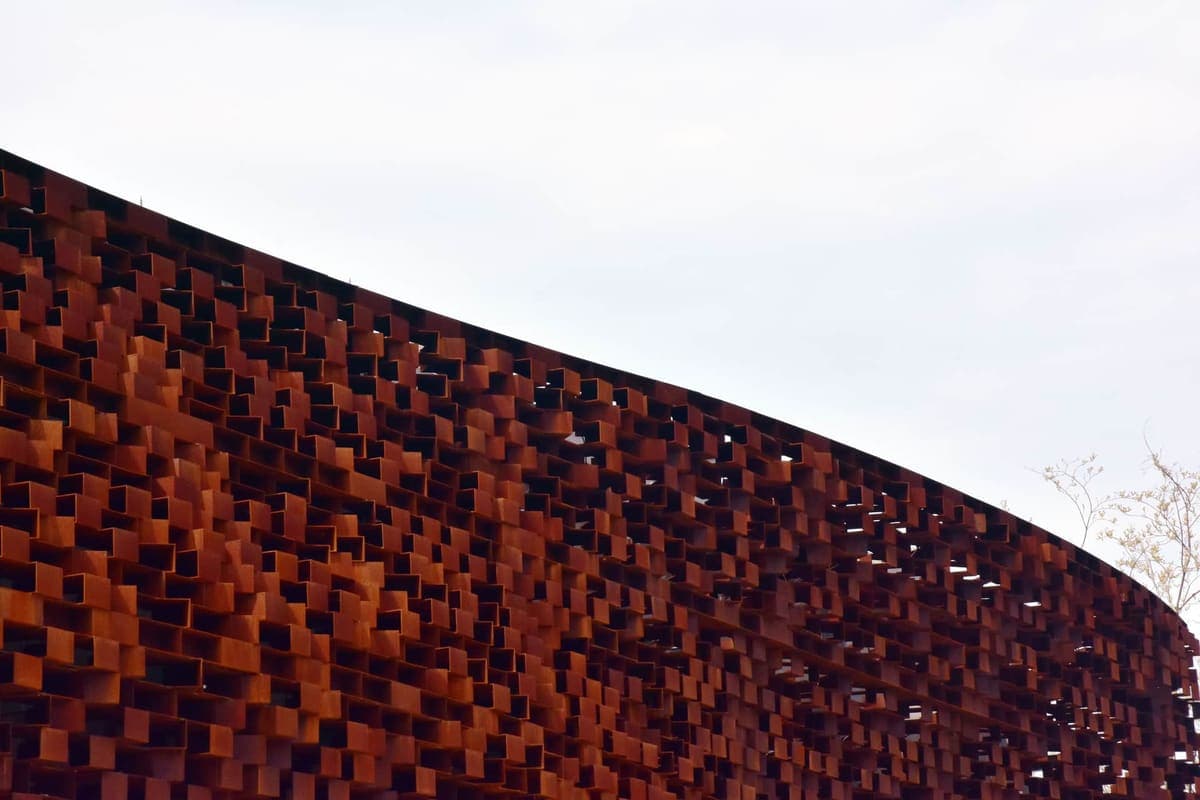
Corten embraces corrosion. It is alloyed so the rust it forms is dense and adherent, sealing the surface rather than flaking off it, and the corrosion rate then falls sharply. It is the material used for weathering-steel bridges, chosen so nobody has to paint them. It works permanently, and it looks rusty permanently, and it deposits some of that rust on whatever is underneath.
The comparison
| Corten | 304 stainless | |
|---|---|---|
| How it survives | Stable self-limiting rust layer | Self-repairing chromium oxide film |
| Appearance over time | Orange-brown, deepening, permanent | Heat-tinted straw and blue near the fire |
| Stains the surface below | Yes, permanently | No |
| Coastal air | Handles it, though the patina behaves differently | Pits over time — the one real weakness |
| Weight | Heavier at the same size | Lighter |
| Maintenance | None, by design | None required; wipes clean if you want |
| Warranty on the finish | None, and it says so | None — rust is excluded |
| Suits | Gravel, grass, a permanent spot | Decks, patios, moving, travel |
The staining question is not negotiable
This is the part people discover after purchase. Rain running off a corten pit carries iron oxide with it, and that runoff stains concrete, pavers, natural stone and decking. The mark appears within the first season, it darkens, and there is no realistic way to remove it from porous material. Sealers help a little and do not solve it.
So the decision tree collapses very quickly. Is the pit going on anything you care about the appearance of? If yes, buy stainless. Everything else on this page is secondary to that question, and it is the reason we put a stainless pit rather than a corten one at the top of the smokeless hub despite corten's genuine longevity advantage.
Weight follows from the material choice
Corten pits are consistently heavier than stainless pits of comparable size — the Breeo X24 is 62 lb against the Solo Stove Yukon's 38 lb at a similar fire diameter. Some of that is sheet thickness and some is design intent: a corten pit is not meant to be moved, so there is no reason to make it light.
That has a practical consequence beyond carrying it. A heavy pit is placed once, which means the clearance measurement has to be right the first time. Measure before it arrives. The clearance table.
What about heat-tinting on stainless?
Stainless discolors near the fire — straw, then bronze, then blue. This is heat tinting, it is a change to the oxide layer rather than corrosion, and it is permanent. Some owners dislike it; it has no effect on the metal's performance. It is worth knowing about because it is often mistaken for damage in the first season.
Both metals, side by side
| # | Product | Best for | Key spec | Price |
|---|---|---|---|---|
| 1 |  Breeo X Series 2462 lb of corten meant to stay where you put it, with a rim designed as a cooking surface. The heaviest pit here and the only one built around a searing ring. | Cooking and permanence | Corten weathering steel | $599.00 · View on Amazon |
| 2 |  Solo Stove Bonfire 2.0The default smokeless pit: 19.5 in of 304 stainless, light enough for one person to move, and the only unit in this set whose ash pan makes cleanup a 30-second job. | Most backyards | 304 stainless steel | $349.99 · View on Amazon |
| 3 |  Breeo X Series 19The X24's construction at 22.1 in and 47 lb. Same corten, same made-in-USA, 15 lb less to move and a smaller clear radius to find. | Corten on a smaller footprint | Corten weathering steel | $399.00 · View on Amazon |
| 4 |  Solo Stove Yukon 2.0The same stainless construction as the Bonfire at 27 in, which is the size where you stop cutting firewood down and start putting full splits in whole. | Six or more people | 304 stainless steel | $499.99 · View on Amazon |
Prices are pulled live from Amazon. Where no live price is showing, the button reads “check price” rather than a number we cannot stand behind.
Breeo X Series 24
Breeo62 lb of corten meant to stay where you put it, with a rim designed as a cooking surface. The heaviest pit here and the only one built around a searing ring.
62 lb of corten meant to stay where you put it, with a rim designed as a cooking surface. The heaviest pit here and the only one built around a searing ring.
- Corten forms a stable oxide layer instead of pitting through, which is why it is sold uncoated
- The rim is a genuine cooking surface with a searing-ring accessory, not a marketing line
- Made in Pennsylvania, which is verifiable and unusual in this category
- 62 lb means it is placed once. Check clearance before, not after
- Corten stains whatever it sits on. Concrete and pavers underneath will discolor
- Nothing about the finish is warranted, because the finish is rust
A permanent spot on gravel or grass where the pit is part of the yard, and someone who will actually cook on it.
The pit has to live on a finished patio, a deck, or anywhere a runoff stain matters. Stainless is the answer there.
We have not burned this unit. These are the things a specification sheet cannot answer, listed rather than glossed over.
- How fast the patina stabilizes in your climate. Humid and coastal air behave differently and Breeo does not publish a timeline
- Whether the heat-output figures circulating for this pit come from a standard test. We found no published method behind them
#ad how we are funded · price as of October 18, 2026
- 1.Amazon listing — Breeo X Series 24 Corten
- 2.Ace Hardware listing — Breeo X Series 24 dimensions, origin and warranty
- 3.Breeo — Limited Lifetime Warranty: free from workmanship and material defects for the lifetime of the original purchaser, and warrants no rust through or burn through for a period of three (3) years from purchase; rust, paint and finish otherwise excluded
Solo Stove Bonfire 2.0
Solo StoveThe default smokeless pit: 19.5 in of 304 stainless, light enough for one person to move, and the only unit in this set whose ash pan makes cleanup a 30-second job.
The default smokeless pit: 19.5 in of 304 stainless, light enough for one person to move, and the only unit in this set whose ash pan makes cleanup a 30-second job.
- 304 stainless resists the pitting that kills painted carbon-steel pits in two seasons
- Removable ash pan and base plate, so the cleanup path is genuinely short
- Light enough that one person moves it off a deck before a storm
- The largest accessory range in the category, so a cooking or lid upgrade exists later
- 17.5 in of usable chamber means standard 16 in firewood often needs splitting down
- The warranty excludes rust, which is the failure mode most owners actually hit
- Published weight varies by 3 lb across retail listings for the same product
A patio or backyard where the pit gets moved a few times a season and cleanup speed matters more than raw fire volume.
You burn full 16 in splits without cutting them down, or you want a pit that doubles as a cooking surface. The Breeo does that better.
We have not burned this unit. These are the things a specification sheet cannot answer, listed rather than glossed over.
- How much smoke reduction you get in practice. It depends on wood moisture, wind and load, and no published figure covers your yard
- Long-run finish durability on the ceramic-coated colorways
- Real burn time on a full load. OutdoorGearLab's 60-minute figure is one test, not a specification
#ad how we are funded · price as of October 18, 2026
Breeo X Series 19
BreeoThe X24's construction at 22.1 in and 47 lb. Same corten, same made-in-USA, 15 lb less to move and a smaller clear radius to find.
The X24's construction at 22.1 in and 47 lb. Same corten, same made-in-USA, 15 lb less to move and a smaller clear radius to find.
- Corten longevity without the X24's 62 lb
- Accessory-compatible with the rest of the Breeo range
- Smaller diameter is easier to clear to code on a real patio
- Still stains the surface underneath
- Heavier than every stainless pit of comparable diameter
- The cooking rim is narrower than the X24's
Someone who wants the corten build but has a mid-size yard rather than an acre.
You need to move the pit regularly, or it lives on a surface that cannot take rust runoff.
We have not burned this unit. These are the things a specification sheet cannot answer, listed rather than glossed over.
- Patina timeline in your climate
- Whether the smaller chamber changes secondary-combustion behavior versus the X24
#ad how we are funded · price as of October 18, 2026
- 1.Amazon listing — Breeo X Series 19 Corten
- 2.Ace Hardware listing — Breeo X Series warranty and origin
- 3.Breeo — Limited Lifetime Warranty: free from workmanship and material defects for the lifetime of the original purchaser, and warrants no rust through or burn through for a period of three (3) years from purchase; rust, paint and finish otherwise excluded
Solo Stove Yukon 2.0
Solo StoveThe same stainless construction as the Bonfire at 27 in, which is the size where you stop cutting firewood down and start putting full splits in whole.
The same stainless construction as the Bonfire at 27 in, which is the size where you stop cutting firewood down and start putting full splits in whole.
- 27 in takes a full 16 in split without cutting, which changes how much work an evening is
- Radiant output scales with fire area, and this is roughly twice the Bonfire's
- Same warranty and same stainless as the smaller units
- 38 lb is a two-person lift once it has ash in it
- It burns wood proportionally faster: bigger fire, bigger woodpile
- Too much pit for a small patio, where the clearance math gets tight fast
A yard with room for a 7 ft circle of clear ground and a group that actually fills the seats.
Your usable space is a patio under 12 ft across. Read the clearance table before you buy the big one.
We have not burned this unit. These are the things a specification sheet cannot answer, listed rather than glossed over.
- Whether the extra diameter meaningfully improves smoke reduction, or just makes a bigger fire
- How the ceramic-coated colorways hold up next to bare stainless over several seasons
#ad how we are funded · price as of October 18, 2026
- Two pits per material, matched as closely as their published dimensions allow.
- Compared on published construction, weight and warranty terms only.
- What we did not do: run a corrosion test, or observe a patina develop.
We have not burned any of these units, and we do not claim to have. The full method, including what it cannot tell you.
If you want the metallurgy in more depth, including how to read a gauge number and what coated carbon steel actually is, the steel and alloy explainer covers it. If you already own a pit and want it to last, rust and maintenance is the practical companion.