Fire Pit vs Campfire
The difference is containment, and containment is what the rules are written around. It also decides where the heat goes and what the ground looks like afterwards.
DisclosureWe earn a commission when you buy through the links on this page, at no extra cost to you. Prices come from Amazon and change without notice. How this site is funded.
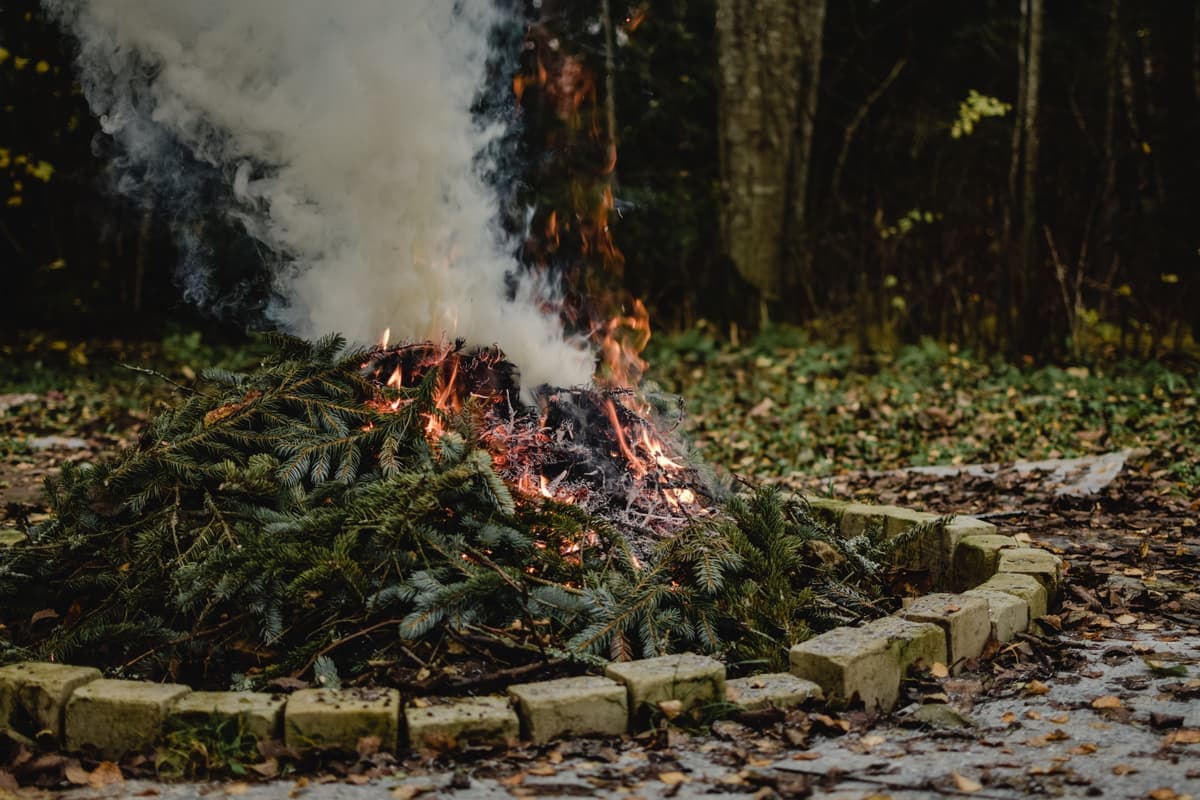
A campfire is a fire built directly on the ground, usually ringed with stones. A fire pit is a manufactured container that holds the fire off or within a defined boundary. Containment is the entire difference, and it changes the rules that apply, the ember risk and what the ground looks like next spring.
| # | Product | Best for | Key spec | Price |
|---|---|---|---|---|
| 1 |  Solo Stove Bonfire 2.0The default smokeless pit: 19.5 in of 304 stainless, light enough for one person to move, and the only unit in this set whose ash pan makes cleanup a 30-second job. | Most backyards | 304 stainless steel | $349.99 · View on Amazon |
| 2 |  Sunnydaze Fire Pit Ring Insert, 36 inA 2 mm steel liner for a hole in the ground. The cheapest real fire pit there is, and the shape the recreational-fire definition was written around. | An in-ground fire pit | 30 in | $179.00 · View on Amazon |
| 3 |  Outland Living Firebowl 893 Deluxe58,000 BTU, CSA-certified, and the pit most often accepted where wood fires are not. The cover and carry kit are in the box, which is why this is the one to buy over the bare 823. | Burn bans and travel | 58,000 BTU/hr | $159.99 · View on Amazon |
Prices are pulled live from Amazon. Where no live price is showing, the button reads “check price” rather than a number we cannot stand behind.
Solo Stove Bonfire 2.0
Solo StoveThe default smokeless pit: 19.5 in of 304 stainless, light enough for one person to move, and the only unit in this set whose ash pan makes cleanup a 30-second job.
The default smokeless pit: 19.5 in of 304 stainless, light enough for one person to move, and the only unit in this set whose ash pan makes cleanup a 30-second job.
- 304 stainless resists the pitting that kills painted carbon-steel pits in two seasons
- Removable ash pan and base plate, so the cleanup path is genuinely short
- Light enough that one person moves it off a deck before a storm
- The largest accessory range in the category, so a cooking or lid upgrade exists later
- 17.5 in of usable chamber means standard 16 in firewood often needs splitting down
- The warranty excludes rust, which is the failure mode most owners actually hit
- Published weight varies by 3 lb across retail listings for the same product
A patio or backyard where the pit gets moved a few times a season and cleanup speed matters more than raw fire volume.
You burn full 16 in splits without cutting them down, or you want a pit that doubles as a cooking surface. The Breeo does that better.
We have not burned this unit. These are the things a specification sheet cannot answer, listed rather than glossed over.
- How much smoke reduction you get in practice. It depends on wood moisture, wind and load, and no published figure covers your yard
- Long-run finish durability on the ceramic-coated colorways
- Real burn time on a full load. OutdoorGearLab's 60-minute figure is one test, not a specification
#ad how we are funded · price as of October 18, 2026
Sunnydaze Fire Pit Ring Insert, 36 in
SunnydazeA 2 mm steel liner for a hole in the ground. The cheapest real fire pit there is, and the shape the recreational-fire definition was written around.
A 2 mm steel liner for a hole in the ground. The cheapest real fire pit there is, and the shape the recreational-fire definition was written around.
- Nothing to break. It is a rolled steel band
- Contains the fire and stops the pit walls collapsing inward, which is the actual job
- Costs a fraction of any manufactured pit of the same diameter
- No smoke reduction of any kind. This is an open fire
- Painted carbon steel will rust, so plan on replacing it eventually
- At 30 in of interior you are within inches of the 3 ft recreational-fire threshold
A yard with room to dig, and someone who wants an open wood fire and nothing else.
You have neighbors close enough to care about smoke, or you live where open burning needs a permit.
We have not burned this unit. These are the things a specification sheet cannot answer, listed rather than glossed over.
- How many seasons the high-temperature paint survives. The listing does not say
#ad how we are funded · price as of October 18, 2026
Outland Living Firebowl 893 Deluxe
Outland Living58,000 BTU, CSA-certified, and the pit most often accepted where wood fires are not. The cover and carry kit are in the box, which is why this is the one to buy over the bare 823.
58,000 BTU, CSA-certified, and the pit most often accepted where wood fires are not. The cover and carry kit are in the box, which is why this is the one to buy over the bare 823.
- CSA certification is the thing an HOA or a campground manager actually asks to see
- No embers, so it is the defensible choice under a covered patio and during most burn bans
- Shuts off instantly, which removes the entire put-it-out problem
- A 1-year warranty is the shortest in this whole registry
- A 20 lb tank has to live somewhere, and the hose length dictates where the pit can sit
- 58,000 BTU is a burner rating, not a measure of how warm you will feel
Anyone in a burn-ban county, on a covered patio, in an HOA, or towing it to a campsite.
You want the smell and the sound of a wood fire. A gas flame is not a substitute, and pretending otherwise wastes your money.
We have not burned this unit. These are the things a specification sheet cannot answer, listed rather than glossed over.
- Real-world runtime, which depends on how low you run the burner. Our figure is arithmetic at full output
- Long-run corrosion on the powder-coated bowl in coastal air
#ad how we are funded · price as of October 18, 2026
What the code actually cares about
IFC-based codes define a recreational fire partly by size and partly by what it is burning in. A fire in an approved container — a manufactured pit, a portable outdoor fireplace — is frequently treated more permissively than the same size fire built loose on the ground, and the clearance distances attached to each are different.
That is worth knowing before you decide the stone ring you built is equivalent to buying a pit. In a lot of jurisdictions it is not, and the difference is not about safety in the abstract — it is that a manufactured container is a known quantity and a hole you dug is not. What counts as a recreational fire · The clearance table, with both code sections.
| Campfire | Fire pit | |
|---|---|---|
| Containment | Stones, or nothing | Manufactured boundary |
| Typical code treatment | Recreational fire, often stricter clearance | Often a defined container category |
| Ember escape | Open on all sides | Contained; screens available |
| Heat direction | Radiates outward and up | Depends on format |
| Ground underneath | Scorched and sterilized | Depends on the pit standing off it |
| Portability | None — it is a place | From 15 lb up |
The code row is the one that varies most by jurisdiction. The framework is national; the specific answer is not.
Ember escape is the practical safety difference
A campfire is open on every side at ground level, which means wind moves across the fuel bed directly and lifts embers out sideways as well as up. A ring of stones stops the fire spreading along the ground; it does nothing about the air.
A pit with walls changes that geometry, and — the part that matters more — a manufactured pit can take a spark screen, which is a stated condition in a good many local rules. That is not available for a stone ring in any meaningful form. Fire pits on grass, and the dry-season problem.
What happens to the ground
A campfire heats the soil beneath it directly and repeatedly, which sterilizes it. The scorched circle where a campfire has been used for years does not simply grow back the next season, and in a yard rather than a campsite that is a lasting alteration to the space.
A pit standing off the ground on legs or a stand does not do this to anywhere near the same degree — though a pit sitting directly on grass still kills the circle underneath it. The relevant variable is the air gap rather than the format name. Surfaces, pads and what goes underneath.
Where the campfire genuinely wins
Two places, and they are real. At an established campsite with a provided fire ring, the campfire is the correct and permitted thing and buying a pit for it would be absurd. And for a large group, a ground fire scales in a way no consumer pit does — you cannot buy a 6 ft fire pit, and sometimes 6 ft of fire is what the occasion wants.
The second case is also where the permit question stops being theoretical, because that size is well past the recreational-fire threshold in most codes. The camping and portable roundup.
Where the fire pit wins
Everywhere else, and mostly for unglamorous reasons. It is permitted in more places, it can take an ember screen, it does not sterilize the ground, it can be moved when the seating or the wind changes, and it can be put out and packed away rather than watched down to cold ash. A pit that raises the fire also draws air from beneath, which burns cleaner than a fuel bed sitting on soil.
What we are not going to tell you
Whether a ground fire is permitted on your property. The code framework is consistent enough to describe; the answer is local, seasonal, and changes with drought conditions. Any page giving you a single national answer is inventing it. Burn bans · Fire pit rules by state.
- The regulatory distinction is quoted from the International Fire Code and linked to the section.
- Product figures are quoted from retail listings and cited on each spec sheet.
- What we did not do: build either one for testing, or measure ember travel or ground temperature.
We have not burned any of these units, and we do not claim to have. The full method, including what it cannot tell you.